THE SCIENCE OF FILTER FEEDING

Not all baleen whales feed in the same way.
Humpback, blue, fin and minke whales belong to the family Balaenopteridae (rorquals), while right whales and bowhead whales belong to the family Balaenidae. Both groups use baleen plates to filter prey from the water, but their feeding strategies are very different.
Balaenids are known as skim feeders. They swim slowly with their mouths partially open, continuously filtering huge amounts of water and small prey such as copepods. This is a relatively low-energy feeding strategy.
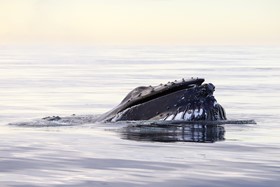
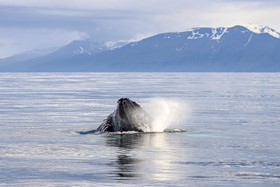
Rorquals, on the other hand, are lunge feeders. They accelerate towards dense patches of prey, open their mouths, and engulf enormous volumes of water and food in a single gulp before filtering the water out through their baleen. This process requires much more energy because of the rapid acceleration, engulfment, and drag created by the open mouth.
Because lunge feeding is so demanding, humpback whales and other rorquals use oxygen more quickly and often perform shorter feeding dives than we would expect for animals of their size.
Prey density is everything. A large gulp of water is only worth the effort if it contains enough prey. The more concentrated the prey patch, the more efficient the feeding event becomes. Both groups have evolved strategies of taking advantage of prey aggregations, but their solutions are different.
One of the most famous examples is bubble-net feeding, a technique used by humpback whales. By releasing bubbles below a prey aggregation, whales can help concentrate prey into a tighter patch, making each lunge more efficient. In some cases, humpbacks even adapt their strategy depending on how the prey is distributed in the water column.
On the other hand for example right whales depend heavily on finding naturally dense patches of zooplankton and can adjust their feeding depth and behaviour.
Different baleen, different prey, different strategies, but the same goal: turning tiny prey into enough energy to power some of the largest animals ever to live on Earth.
Photos by Sarah (captain/head guide)