TIME TO BREATHE

Whales are "conscious breathers", meaning they must actively control every breath they take. Unlike humans and most other land mammals, they cannot rely on automatic breathing. Instead, breathing is under voluntary control of the central nervous system (CNS).
This means whales don't simply keep breathing subconsciously while being busy with something else, such as feeding, traveling, or resting. They must consciously surface and take a breath to supply their bodies with oxygen. In that sense, breathing is an intentional action rather than an automatic reflex.
Having conscious control over breathing helps prevent whales from accidentally inhaling water while diving. Even when oxygen levels drop, they won't instinctively gasp underwater. Instead, they remain in control and surface when it's safe to breathe.
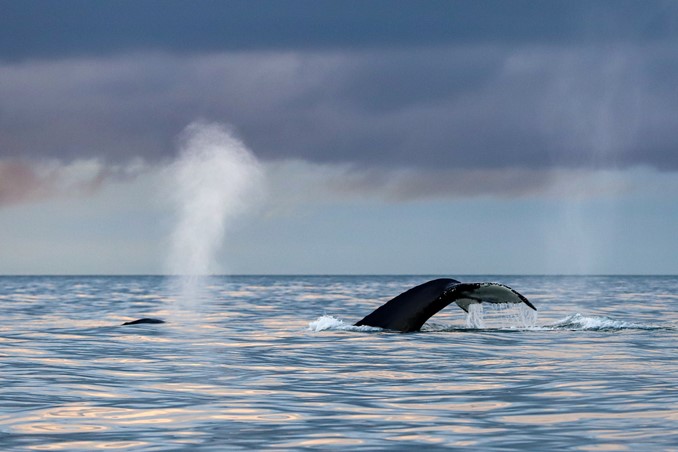
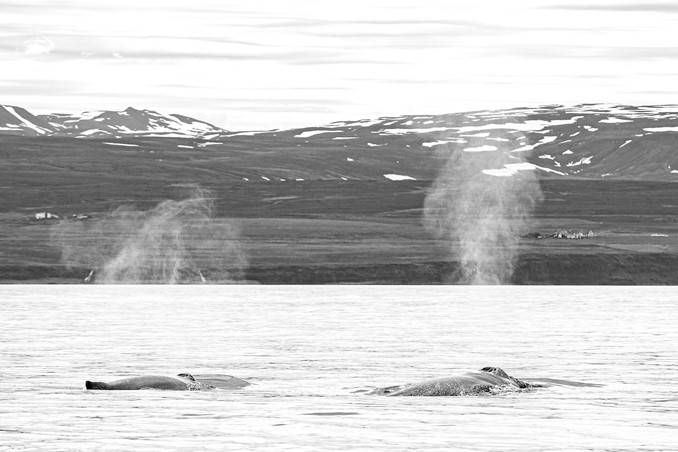
Whales also have complete control over their blowholes, which are the equivalent of our nostrils but are located on the tops of their heads. Their blowholes are kept tightly closed by powerful muscles while underwater, preventing water from entering the lungs. When they reach the surface, they voluntarily relax these muscles, open their blowholes, and take a breath before diving again.
Text & Photos by Sarah (captain/head guide)