MASTERS OF THE PLUNGE

Skjálfandi Bay is famous for its whales, but the skies above the bay are just as full of life. Throughout the season, a variety of seabirds and migratory birds can be spotted here, adding another dimension to every wildlife adventure. Among the most spectacular is the northern gannet—a remarkable seabird known for its graceful flight and breathtaking dives into the ocean.
They are the largest seabirds in the North Atlantic, with wingspans reaching up to two meters. Adults are easily recognized by their bright white feathers, pointed wings with black tips, and pale golden crown. Their long bill and blue-rimmed eyes give them a striking, almost fierce expression. Juveniles, however, start out mottled brown and take four to five years to achieve their full adult plumage.
Their hunting skills alone are something only few seabirds can match: Spotting schools of fish from above, they fold their wings back and dive like arrows into the ocean from heights of up to 40 metres and at speeds of 60 mph / 97 kmh. To withstand the impact, gannets have evolved special adaptations: air sacs in their face and chest act like cushions, and their nostrils are internal, preventing water from rushing in. Their preferred prey includes mackerel, herring, and sand eels, which they often catch underwater after their initial plunge.
Over summer, gannets breed in large, noisy colonies on remote cliffs and islands - the clostest colonies to Húsavík can be found towards the Northeast, in areas such as Melrakkaslétta and Langanes.
Nesting gannets pack tightly together. Pairs are monogamous and often reunite each year, greeting each other with a ritual of bill fencing and bowing. A single egg is laid and incubated by both parents, and the chick grows rapidly thanks to a steady diet of regurgitated fish.
While they spend their summers breeding in the North Atlantic, they migrate south in winter. Many travel as far as the Mediterranean or the west coast of Africa, taking advantage of rich fishing grounds before returning north the following spring.
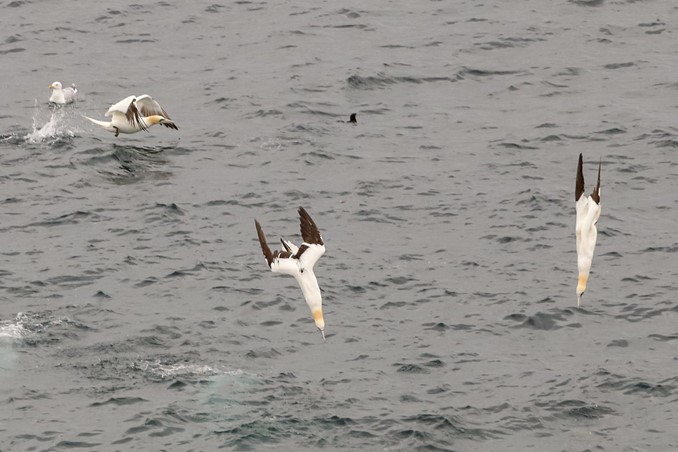
Photo by Sarah (head guide/captain)
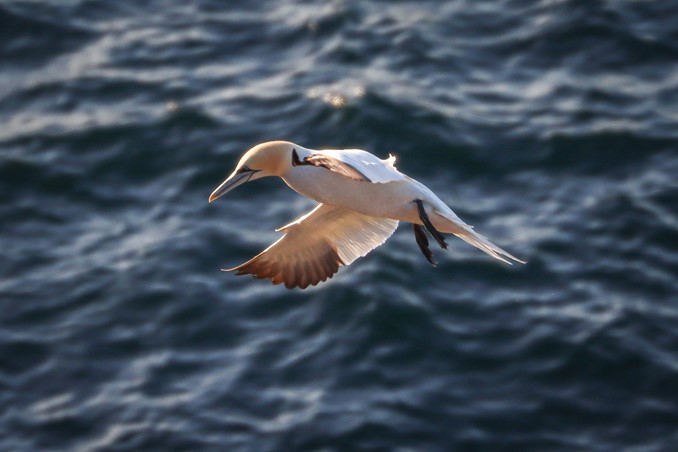
Photo by Sarah (head guide/captain)
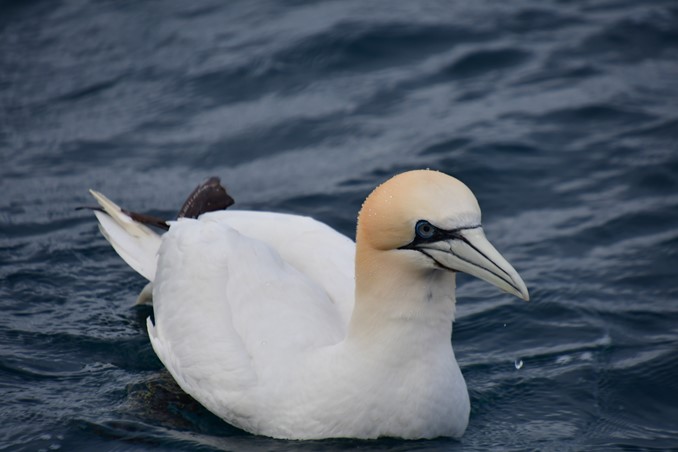
Photo by Joséphine (head guide/captain)
Title photo by Joséphine (head guide/captain)